


Portable Screening Plant
Factory Strength
Wiki Industrial Equipment Manufacturing Co., Ltd. is an enterprise focusing on mining machinery manufacturing. The company produces various types of mobile stacking conveyors, grain conveyors, mobile screening equipment, various types of skid loader accessories, excavator accessories, which are used in mining machinery, garden machinery, etc.
Professional Team
The company has carried out a number of R&D projects for its products and technologies, and has formed a professional R&D team to engage in R&D activities
Market Distribution
Main customers are distributed in the United States, Canada, Australia, Mexico and other countries.
Our Intellectual Property
18 intellectual property rights have been applied for, of which 2 software copyrights have been obtained, and another 16 utility models are being processed, to protect the company's products and technologies in all aspects.
What is Portable Screening Plant
Portable Screening Plant performs essential functions for a variety of aggregate processing applications. In order to ensure this important task is completed properly, you'll need to choose the right screening equipment for the specific sorting task associated with your application.Screening plants are used to size and separate rock materials after crushing. During the screening process, these materials are separated into grades based on their particle size. In some instances, screening plants are used to separate materials immediately following the primary crushing phase, while other applications use screening equipment later in the process, right before materials are stockpiled for transport.
-
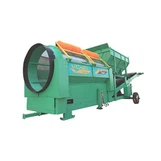
 Mobile Trommel Screen PlantF4L914; 4cyl 70HP. 30in * 9Ft roller belt FDR. 48in*3.2Ft under screen rear discharge conveyor. VICKEY offers mobile trommel screen plants that are highly efficient in the separation and processingAdd to Inquiry
 -
 510W Portable Trommel ScreenF4L914; 4cyl 70HP. 30in * 9Ft roller belt FDR. 48in*3.2Ft under screen rear discharge conveyor. The 510W portable trommel screen is a self-contained, diesel-powered, portable screening plant designedAdd to Inquiry


Benefits of Portable Screening Plant
It Can Be Transported From One Mine or Quarry to Another
Unlike a traditional screening plant, a mobile screening plant is housed in a trailer-like unit so that the screening tools can be transported from one part of the mine to another or from one location to another. This is perfect for companies that do not solely operate out of one location. This allows you to move the screening plant as you move to different mines.
It Takes Up Less Space Than a Full-Size Screening Plant
Another benefit associated with a mobile screening plant is that they often have a much smaller footprint and take up less space at a site compared to a full-size screening plant. If the job site is small, or if there is not a lot of flat space, a mobile screening plant is perfect. It provides you the ability to sort and screen aggregate material without the space requirements of full-size machinery and screening equipment.

You Do Not Need to Meet Building Code and Regulations for Mobile Buildings
If you are looking to construct a full-size, permanent screening plant, you have to get permits, work with building regulators, and ensure your building meets building codes. This can be time-consuming, and it does not always allow you to place the plant in the location that is most convenient for your needs. A mobile screening plant does not need to meet these same building regulations and requirements. As such, it is faster and easier to get the screening plant you need in place.
It Is Cheaper Compared to Installing a Permanent Screening Plant
The final benefit associated with a mobile screening plant is that they are cheaper compared to installing a permanent plant. If money is tight, you may wish to simply use a mobile screening plant instead of constructing a permanent one to save money.
Types of Portable Screening Plant
Scalping Screens
Are highly versatile screening plants suitable for virtually any screening application. Therefore, this type of screener is popular among contractors who have little control over their feed and need the freedom to use it in many applications.
Incline Screens
Incline Screens are high-performance aggregate screens. Commonly found in quarries, gravel pits, and sand pits to produce finished aggregate products. They can be easily integrated into aggregate systems or fed stand-alone with large wheel loaders.Scalping and incline screens are the most sold type of tracked screener and work well in the same applications. However, there are many differences between them. Learn more about the differences in this blog article.
Horizontal Screens
Horizontal screens are an out layer in the mobile screening plant categories. This type of screener is commonly used in aggregate systems and provides more precision than an incline screen. It works without the aid of gravity to move material down the screen and relies solely on the screening plant's stroke to pitch the material over the screen deck.
Trommel Screens
Contrary to the previous screener types, the trommel screen does not feature a vibratory screen deck but a rotating trommel that turns the material to screen the product. Most mobile trommel screens are suited for topsoil screening, organics, and other lightweight materials. Less commonly seen are heavy-duty trommel screens for screening large rock boulders in heavy-duty quarrying applications.
What Is The Purpose of a Portable Screening Plant In a Sand Quarry?
Particle Size Classification
The mobile screening plant helps in classifying sand particles based on their size. This is crucial because different construction and industrial processes require sand of specific particle sizes. The screening process allows for the separation of coarse, medium, and fine particles.
Quality Control
By screening the sand, the quarry can ensure that the final product meets quality standards. Removing impurities and unwanted materials helps produce clean and high-quality sand that is suitable for use in concrete, asphalt, and other construction applications.
Efficient Processing
The mobility of the screening plant enables it to be positioned at different locations within the quarry, optimizing the processing workflow. This flexibility allows for efficient extraction, screening, and transportation of sand to meet production demands.
Resource Optimization
Screening plants contribute to the efficient utilization of resources by ensuring that only the desired particle sizes are processed further. This helps minimize waste and enhances the overall productivity of the quarry.
Environmental Compliance
Proper screening helps in complying with environmental regulations by preventing the release of excessive fines or contaminants into the environment. This is important for sustainable quarrying practices and minimizing the impact on surrounding ecosystems.
Versatility
Mobile screening plants are designed to handle a variety of materials, not just sand. They can be adapted for different types of quarried materials, providing versatility in processing various aggregates.
Portable screen plants: separating the good from the bad
Hopper Size
Industry standard hoppers are 12 feet wide with an option to upgrade to a 14-foot-wide hopper. An extra two feet can capture more product and prevent spillage. The size of the hopper is perhaps most pertinent when pairing the screener with the loading machine.
Livehead and Tipping Grid
Operators can add a livehead or tipping grid to a screener above the hopper for additional sizing. While they perform a similar duty, they are very different. A tipping grid is essentially a hinged grid that blocks larger materials from entering the hopper. This is an affordable option, but can become a chore, particularly in wet or dirty applications where the tipping grid may become plugged frequently.
Apron Feeder vs. Belt Feeder
A belt feeder is another key element to evaluate, as different products vary in durability. The standard belt feeder is perfect for sand and gravel operations, but is likely to tear or break when working with metal, large rock or extremely abrasive material. An apron feeder, which is essentially a belt made of metal, is durable and can handle nearly anything an operator throws at it.
Screen Media
Operations working with abrasive materials may want to consider stainless steel as an alternative to regular wire mesh. Stainless steel costs nearly twice as much but offers longer wear life.Additional options are appropriate for some operators. For example, bofar bars are designed for miscellaneous dirty material. Punch plates are used for heavier applications. Finger decks are ideal for reclamation, landfill jobs or jobs where clogging, blinding or breakage might be an issue. Finger decks can easily accommodate high-impact loads mixed with recycled waste and debris.
Stockpiling
The higher you’re able to stockpile, the less time it will take your operators because they’ll be able to run for longer periods without having to move material. Even an additional 8-10 inches of stockpile height can make a significant difference.
Conveyors
Conveyor rollers commonly break under pressure and belts become punctured. As an alternative, some manufacturers offer an impact or sleigh bed conveyor. The impact bed is solid and runs the width of the conveyor to best accommodate the impact of material and prevent belt damage. These conveyors provide additional support and are more durable so they can handle heavy products.
How to Choose Portable Screening Plant
Main Types of Screen Machines to Consider
Interestingly, there are only two main types of screen equipment: incline and horizontal configurations. And, industry veterans will tell you that incline screens are almost always the more efficient choice.However, you need to have a solid understanding of your operating parameters and overall production goals to make the call on which screens will work best. Additionally, there are several options related to how your screens will actually run that you’ll need to choose between. You’ll need to evaluate your requirements for feed tonnage, screening area, and efficiency to guide your choice.
Incline vs. Horizontal Screens
It’s true that incline screens are typically your best bet, no matter where they fit in your circuit. Why? Well, because they harness the power of gravity to reduce power consumption. As a result, the incline configuration has better capacity abilities when operating at similar speeds versus horizontal screens.Of course, if you’re limited at your quarry or mine site by vertical clearance challenges that would prevent the incline from being constructed at the proper angle—often about 20 degrees on the top deck—you will have to choose a horizontal screen. Also, horizontal screens are commonly used in portable plants, or if you’re feeding from a dredge in water-intensive operations.
Motion Differences
There are three main ways that screens can move to achieve necessary stratification.Horizontal screens will typically vibrate with either linear motion or an elliptical motion. Both movement patterns are effective, but the linear—or straight-line—motion produces high G-forces that P&Q University asserts, “can both dislodge material and convey it forward across the screen.”Inclined screen machines can also vibrate in linear or elliptical patterns, as well as in a circular motion, which tends to be preferred in continuous feed setups where screening of large material must be accomplished.
Other Considerations in Screening Operations
In addition to considering whether you will use incline or horizontal screens and how they should vibrate to provide your desired output, setting up a screening operation will require you to look at a few more decision points.
How to Maintain Portable Screening Plant
Schedule regular inspections
Regular inspections of the plant help to identify potential issues early and take corrective actions.
Clean and lubricate regularly
Clean the plant regularly to remove any buildup of debris. Lubricate moving parts, such as conveyor belts, to reduce wear and tear.
Check the belts
Inspect the belts for any signs of wear or damage and replace them if necessary.
Inspect and tighten bolts
Regularly inspect bolts and tighten them as needed to maintain structural integrity.
Change the oil and filters
Regular oil changes and filter replacements help to maintain the performance and efficiency of the plant.
Check the electrical and hydraulic systems
Regularly inspect the electrical and hydraulic systems and make any necessary repairs or adjustments.
Monitor performance
Continuously monitor the performance of the plant and take corrective actions to optimize its performance.
Keep detailed records
Keep detailed records of maintenance activities, including when maintenance was performed, what was done, and the results.
Our Factory
VICKEY Industrial Equipment Manufacturing Co., Ltd. is a manufacturing company specializing in mining machinery. The company produces various types of Skid Steer Mulchers, grain conveyors, portable screening plants, and all kinds of skid steer attachments & excavator attachments, applied to mining machinery, garden machinery, and so on. Our products are exported overseas, the main customers are located in the United States, Canada, Australia, Mexico, and other countries, and has received praise from customers!


FAQ
We're professional portable screening plant manufacturers and suppliers in China, specialized in providing the best custom service. We warmly welcome you to buy portable screening plant for sale here from our factory. For price consultation, contact us.
510w portable trommel screen, mobile trommel screen plant, portable screening plant