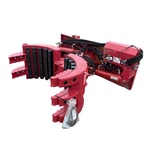
1. Preparation before operation
A comprehensive inspection of skid steer brush cutter is the first priority. Check the degree of wear of the blade or cutting chain. If the blade is blunt, notched or the cutting chain is broken or loose, it needs to be replaced or adjusted in time to ensure cutting efficiency and safety. At the same time, carefully check the power transmission system, including the drive shaft, pulley, chain and other components, to confirm that the connection is firm and there is no abnormal wear or looseness. The protective device should not be ignored. Check whether the guardrail and protective cover are intact and can effectively block the debris splashed during the cutting process. In addition, it is necessary to conduct routine inspections of the skid steer loader itself, such as fuel quantity, hydraulic oil level, tire pressure, etc.
Clean up the work site and remove obstacles that may affect the operation of the equipment, such as large stones, tree trunks, etc. Set up warning signs to isolate irrelevant personnel and animals outside the work area to ensure work safety. According to the distribution and growth conditions of vegetation, plan a reasonable work route to improve work efficiency.
2. Equipment startup and commissioning
Firmly install the brush cutter on the adapter interface of the skid loader, use the special connection bolts and tighten them according to the specified torque to ensure stable and reliable connection. Start the engine of the skid loader and let it idle for a while to warm up the systems and enter normal working state. Then, follow the start-up procedure of the brush cutter. Usually, turn on the power transmission switch first, let the cutting device rotate slowly, and observe whether its rotation direction is correct. If the direction is wrong, it is necessary to stop the machine and adjust the connection method of the power transmission line. When the cutting device rotates at a low speed, check for abnormal sounds or vibrations. If there is a problem, the fault should be promptly checked.
3. Formal cutting operation
The operator sits in the cab of the skid loader and controls the forward, backward and steering of the loader through the operating handle. When approaching vegetation, adjust the cutting height of the brush cutter appropriately according to the type and height of the vegetation. For shorter weeds, the cutting device can be appropriately raised; for taller shrubs or small trees, the cutting height is lowered so that the blade or cutting chain can effectively cut into the vegetation. During the cutting process, the moving speed of the loader should be controlled smoothly to avoid being too fast or too slow. Too fast speed may lead to incomplete cutting, while too slow speed will reduce work efficiency and increase equipment wear. At the same time, always pay attention to the working status of the cutting device. If abnormal vibration, blockage or power reduction is found, stop the operation immediately and check the cause.
4. Clean up after the operation is completed
After completing the brush cutting operation, first turn off the power transmission of the brush cutter to stop the cutting device from rotating. Then turn off the engine of the skid loader. Clean the vegetation residue on and around the brush cutter, and check whether the blade or cutting chain, power transmission components and protective devices are damaged or deformed. If there is any problem, record it in time and arrange for repair. Finally, clean up the work site, remove the warning signs, park the equipment in the designated location and keep it properly.
If you want to know more about skid steer brush cutter, please contact VICKEY Industrial Equipment Manufacturing. Our professional technical team can tailor the product solutions you need according to your different needs.
https://www.vickwest.com/